
I once worked for a manager who never made a decision. He was thoughtful, well-intentioned, and completely committed to having all the right information before doing anything. I’d suggest a change and he’d say “let me think about that”, and then nothing would happen.
Every time he went on vacation, I would be put in charge, and on the first day, I’d implement every change he’d been sitting on. The team knew what needed doing; we’d been talking about it for months. We just needed the space to do it.
When he came back, he’d look at the new state of things and see they were working. Then he’d leave them in place.
This happened every vacation, without fail. We’d make forward progress a couple of times a year and then be stalled again.
That was my experience as the subordinate. A client described the same dynamic to me recently, from the other side of it. Every team lead wanting to be involved in every decision, every manager reluctant to hand anything off. A different flavour of a fundamentally similar problem.
I have to ask, what this behaviour is actually costing the organization. Not in the abstract. In specific, concrete terms.
When a manager inserts themselves into every decision, they become a bottleneck, with work queuing up behind them. Their team stops developing judgment because there’s no space to exercise it. Over time, the team stops offering options and starts waiting to be told, not because they’re incapable, but because they’ve learned that’s how things work here.
The more decisions we make for people, the more they expect us to keep making decisions.
This is a system that is highly optimized to block improvement.
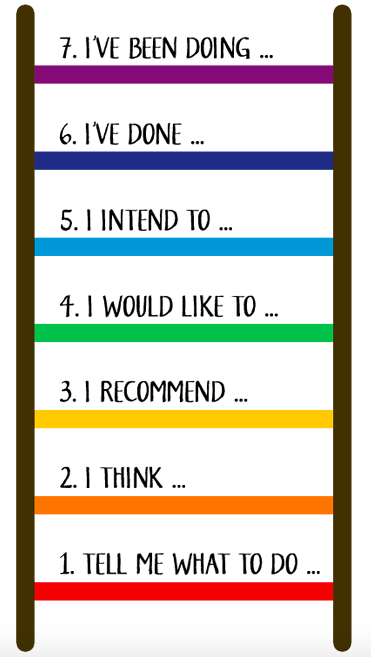
David Marquet developed the Ladder of Leadership while commanding a nuclear submarine, and it’s the most useful model I know for this problem. At the bottom of the ladder, people wait to be told what to do. At the top, they act autonomously and report back. The leader’s job is to deliberately move people upward, and to stop doing the things that keep them at the bottom.
If you’re a manager who finds yourself involved in everything, you may be keeping your people low on that ladder without realising it. Not through malice. Through habit, and through the understandable belief that it’s faster to do it yourself than to explain it.
Back to the vacation test: if your team moves faster when you’re on vacation, what does that tell you about how you’re showing up when you’re present?
The vacation test isn’t really about whether you can take two weeks off. It’s about what your team discovers about themselves while you’re gone, and whether you let them keep it when you come back.